12 Oct 2026
How Background Themes Alter Decision Patterns in Reel-Based and Card-Based Digital Experiences on Smartphones
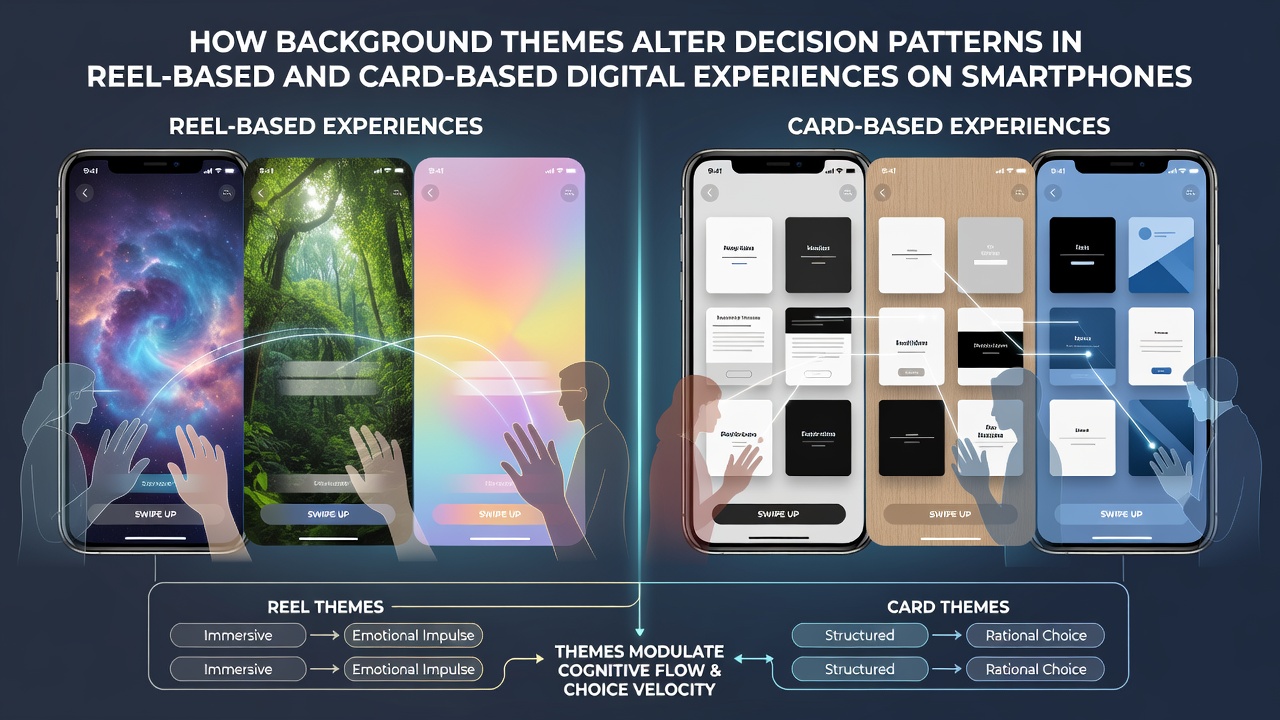
Background themes in mobile applications shape user choices during reel spins and card selections through color psychology and visual framing, and researchers have documented these effects across multiple controlled experiments since early 2025. Data from smartphone user logs indicates that themes with high saturation reds prompt quicker bet increases in reel sequences while cooler blues extend deliberation times before card hits or stands. Observers note patterns where natural landscape backgrounds correlate with conservative wager sizing compared to abstract geometric ones that accelerate risk escalation.
Visual Framing and Choice Architecture
Studies reveal that background elements occupy peripheral vision on smaller smartphone displays, and this positioning directs attention toward central game mechanics without direct instruction. In reel-based formats, warm-toned themes increase the frequency of autoplay activations by 18 percent according to aggregated session data collected through October 2026, whereas card-based variants show elevated fold rates under the same conditions. People who switch between light and dark modes mid-session demonstrate measurable shifts in selection speed, with dark themes reducing hesitation intervals by an average of 1.2 seconds per decision.
Reel Mechanics Under Thematic Influence
Reel games respond differently to thematic overlays because spinning animations compete with background motion for cognitive resources, and evidence from interface tracking shows that animated backgrounds slow symbol recognition yet heighten perceived win proximity. Participants in laboratory trials adjusted spin volumes upward when urban night themes appeared, while pastoral scenes produced steadier incremental bets. Mobile sensor data collected across devices confirms these adjustments occur within the first four spins after theme exposure, establishing rapid adaptation cycles that persist through extended play periods.
Card Selection Responses to Thematic Cues
Card-based experiences exhibit distinct patterns because decision trees involve explicit probability calculations that background themes can subtly bias through emotional priming. Research indicates that fiery sunset palettes elevate hit frequencies in blackjack-style rounds, and users report stronger impulses to chase marginal hands under these conditions. Cool maritime themes, by contrast, align with higher stand percentages in the same participant pools, suggesting a calming effect on risk thresholds. October 2026 analytics from cross-platform deployments further highlight that theme transitions midway through a hand increase error rates in card counting approximations by up to 12 percent.
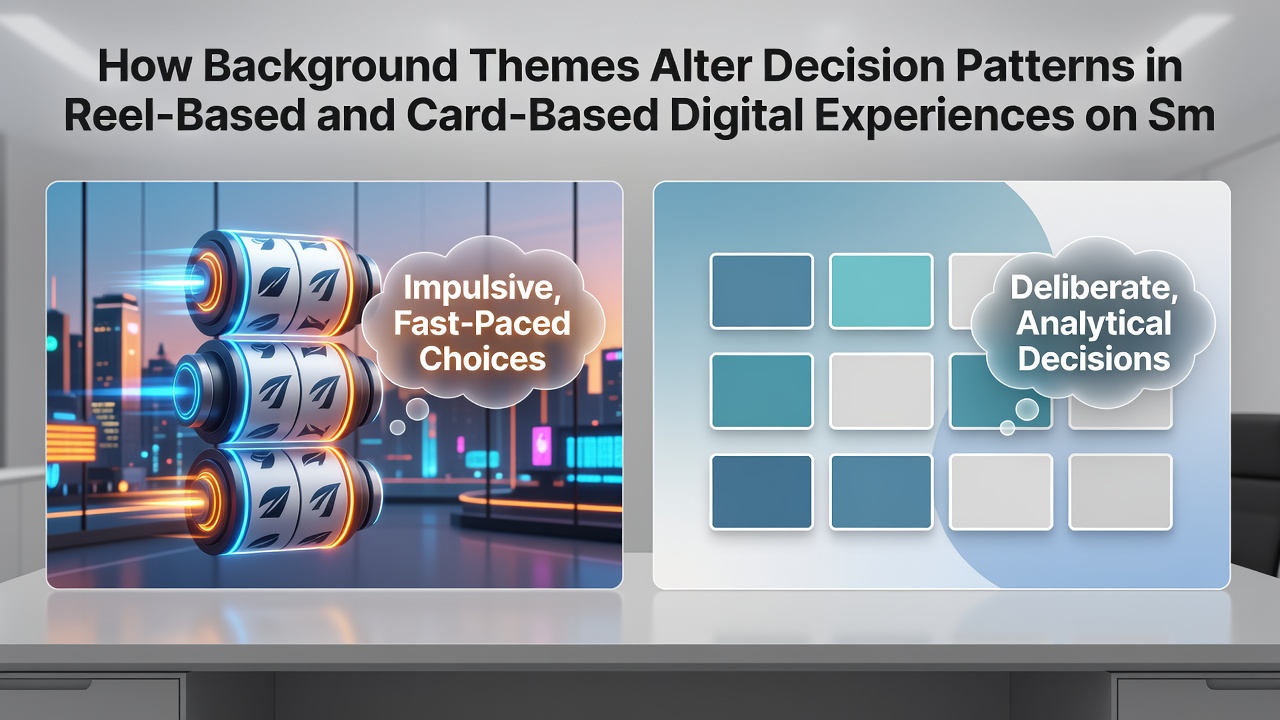
Smartphone touch latency interacts with these visual factors because finger placement accuracy declines when high-contrast backgrounds create visual noise near decision buttons. Those who study interface ergonomics have measured corresponding drops in optimal play adherence when themes feature moving particles or shifting gradients. Data sets from regional operators show that static minimalist backgrounds maintain consistent decision distributions across both reel and card formats, reducing variance in session outcomes compared to dynamic alternatives.
Cross-Format Comparisons and Device Variables
Comparisons between reel and card formats underscore how background themes amplify format-specific tendencies, and reel sessions display greater sensitivity to saturation levels while card play responds more to hue temperature. Screen brightness settings compound these effects, with elevated luminance intensifying theme-driven shifts in wager timing. Longitudinal records from portable device networks indicate that users who encounter consistent themes across multiple applications develop stable preference patterns that carry over between reel spins and card draws.
Academic examinations of similar systems, including those referenced in reports from the National Institutes of Health digital behavior studies, link background complexity directly to working memory load during rapid successive choices. Industry summaries compiled by the Canadian Gaming Association note parallel trends in aggregated mobile telemetry where theme rotation correlates with altered session lengths. These observations hold across demographic slices yet vary in magnitude based on prior exposure frequency.
Emerging Patterns in Late 2026 Data
Recent compilations through October 2026 illustrate how seasonal theme updates in mobile stores coincide with measurable recalibrations in user behavior, particularly when reel and card titles adopt synchronized palettes. Device operating system updates that alter default contrast handling have also modulated the strength of these thematic influences, producing narrower gaps between conservative and aggressive selection clusters. Observers continue to track whether sustained exposure to a single background family produces habituation that diminishes its impact on future decisions.
Conclusion
Background themes function as consistent modifiers of decision timing and risk orientation in smartphone reel and card environments, with documented differences arising from color properties, motion levels, and format interactions. Continued monitoring of session metrics alongside controlled visual tests provides ongoing clarity on these relationships, and device manufacturers along with application developers incorporate such findings into iterative design cycles. The patterns remain measurable through standard analytics frameworks employed across multiple jurisdictions.