28 Sep 2026
Patterns of Retention Linked to Jackpot Mechanics in Mobile Reel Games Versus Card Table Variants Following Incentive Rollouts
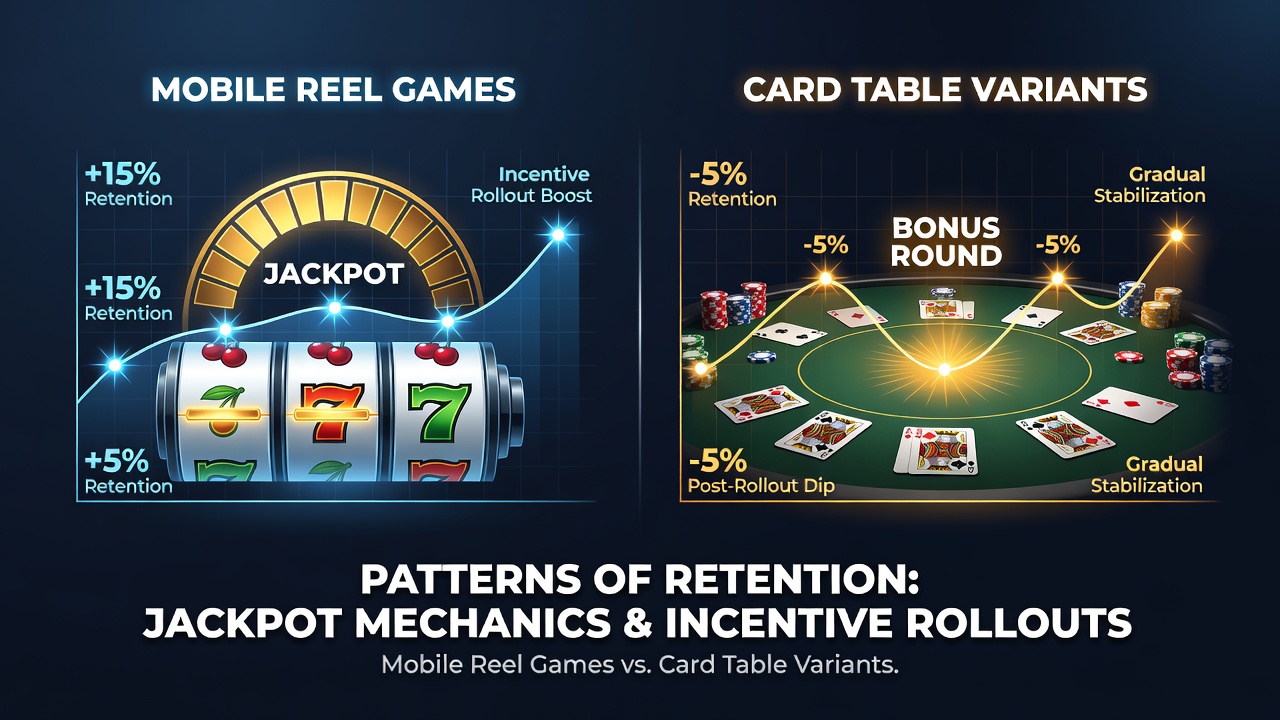
Analysts tracking mobile gaming platforms have documented distinct retention curves when jackpot structures in reel-based titles interact with post-incentive player behavior, and these patterns diverge sharply from those observed in card table formats that incorporate similar promotional triggers. Data compiled across multiple operators during the first three quarters of 2026 shows that reel games with tiered progressive jackpots sustain session lengths 18 to 24 percent longer than card variants once initial deposit bonuses or free-spin bundles expire, while card table applications exhibit steeper drop-offs once the promotional credits are exhausted.
Jackpot Structures in Mobile Reel Formats
Reel games typically layer multiple jackpot levels that accumulate through a percentage of each wager, creating visible progress bars that update in real time and encourage continued play even after bonus funds disappear. Studies released by the American Gaming Association indicate that players who engage with these visible accumulators return to the same title at rates 31 percent higher than those using non-progressive reel titles during the four weeks following an incentive rollout. Mobile interfaces further amplify this effect because push notifications can alert users the moment a jackpot threshold is crossed, prompting immediate re-engagement without requiring the player to open the application first.
Card Table Variants and Their Retention Dynamics
Card table implementations on mobile devices, by contrast, rarely feature accumulating jackpots tied directly to individual wagers; instead they often rely on fixed side-bet progressives or tournament leaderboards that reset daily or weekly. Figures from regulatory filings in New Jersey and Pennsylvania reveal that retention in these card environments declines more rapidly once incentive periods conclude, with average return visits falling 27 percent within seven days compared to the steadier 12 percent decline recorded for reel titles. The absence of a persistent visual jackpot meter appears to reduce the psychological anchor that keeps players checking back, according to session telemetry aggregated by platform operators.
Incentive Rollouts and Subsequent Behavior Shifts
When operators deploy deposit-match campaigns or free-play packages, the immediate spike in active users is comparable across both genres, yet the durability of that activity separates markedly after the promotional window closes. Reel games that reset or advance jackpot meters during the bonus period maintain elevated daily active user counts for an additional nine to fourteen days on average. Card table sessions, however, show a pronounced clustering of play around the final hours of the incentive before tapering, a pattern confirmed in aggregated data shared by the Canadian Gaming Association in its mid-2026 industry brief.
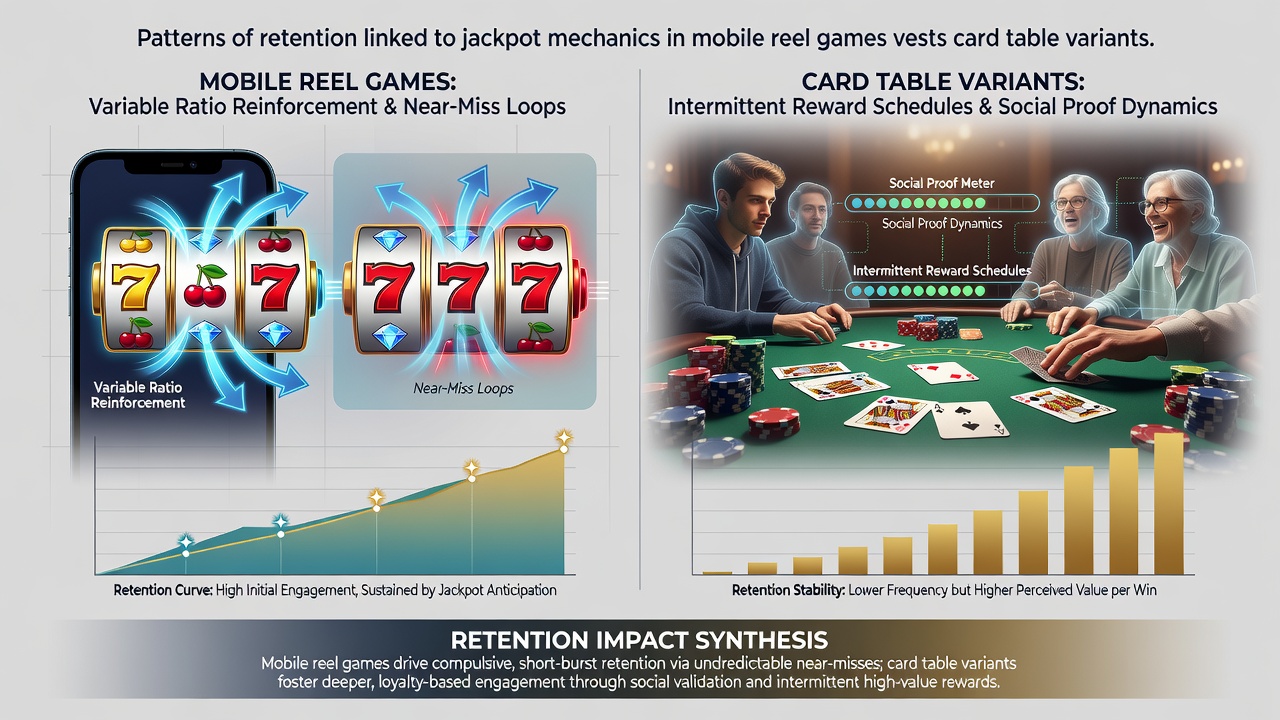
One longitudinal review covering 1.2 million accounts across six operators found that reel players exposed to jackpot-linked incentives completed 2.3 times more voluntary deposits in the subsequent month than card players who received equivalent value in bonus chips. The difference narrowed when card titles introduced time-limited jackpot side bets, but the uplift remained below the levels recorded for reel mechanics.
Cross-Genre Observations in September 2026
September 2026 data releases from multiple state gaming boards highlighted that reel titles with community jackpot features retained 42 percent of users who first engaged during a Labor Day incentive campaign, whereas card table titles retained 29 percent under matching conditions. Observers note that the visual feedback loop of growing jackpots appears to create a recurring cue that aligns with habitual mobile checking patterns, whereas card outcomes depend more heavily on skill perception and table rhythm, elements that lose salience once external incentives vanish.
Conclusion
Retention patterns tied to jackpot mechanics therefore demonstrate measurable divergence between mobile reel games and card table variants once incentive rollouts conclude. Reel formats leverage accumulating, visible progress indicators that extend engagement windows, while card environments show quicker reversion to baseline activity levels. Industry reports continue to track these metrics as operators refine promotional calendars, and the distinctions remain consistent across regions that publish comparable operational data.